

Introductory Section:
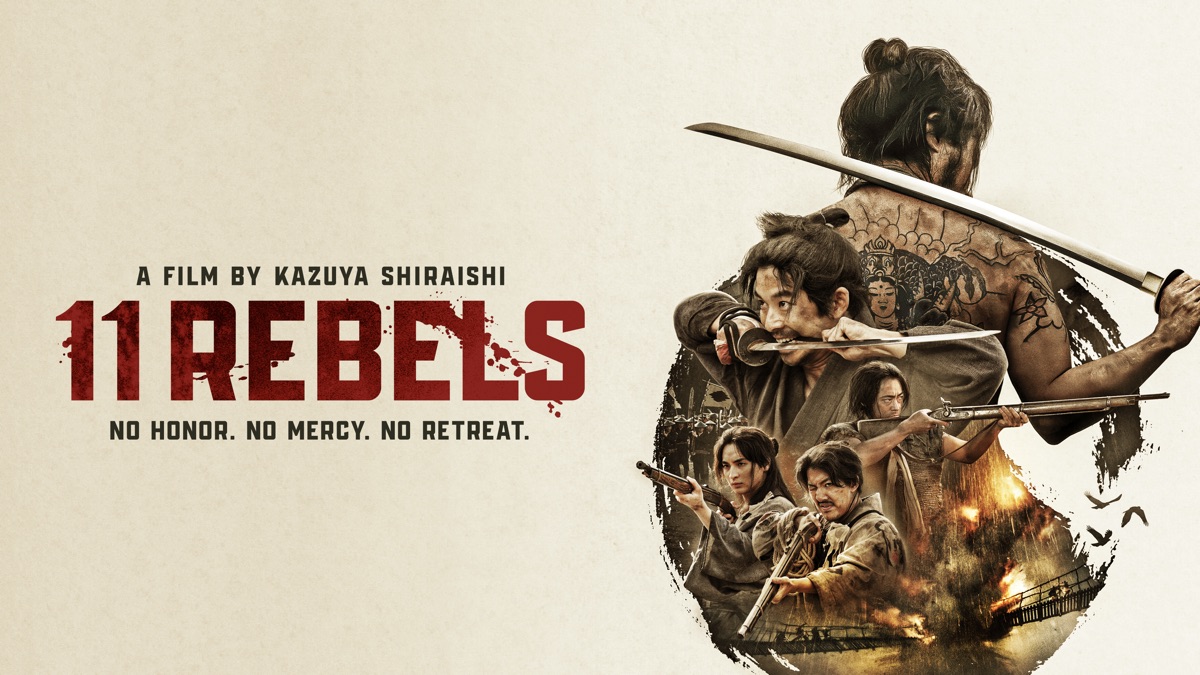
Since the 2010s, we’ve seem to enter a golden age of Samurai Cinema especially those that made their way here in the west. Therefore I’ve been a longtime fan of the genre since the early 2000s, thus enjoying all the drama, conflict and cool swordplay. Films like 13 Assassins and Hara-Kiri: Death Of A Samurai which are both directed by the legendary Takashi Miike. Even films like 47 Ronins starring Keanu Reeve and Unforgiven which is a 2013 remake of the 1992 Clint Eastwood western film. There’re even films like Blade Of The Immortal and the Rurouni Kenshin film series that offer something different, and kinda redefine the genre by focusing more on stylish swordplay. And the genre continues to get stronger through the 2020s which bring us to 11 Rebels, a samurai film with a particular premise.
Released back in 2024 and directed by Kazuya Shiraishi, this recent samurai film functions more like a companion piece to Takashi Miike’s 13 Assassins narratively. It also functions more like a modern update (at least in my opinion) of Akira Kurosawa’s 1954 classic Seven Samurai film with it premise. However the big differences between them is that 11 Rebels is inspired by a historical event, particularly amidst what’s called the “Boshin War” from the mid 19th century. Though both films do lean more into historical fiction as they do lean into that sense of adventure with many of it characters. While 11 Rebels, being a more modern samurai film is more serious due to it heavy themes of conflict and betrayal with it characters. The action scenes are fun to watch though the film is brutal and emotional as some scenes can become difficult to endure. Though it does feel like a premise similar to Seven Samurai, about a group of individuals banding together to stop an opposing force, which give the film a strong viewing experience with longtime fans and newcomers alike.
Official Summary:
(This section contains spoilers, thus read with caution)
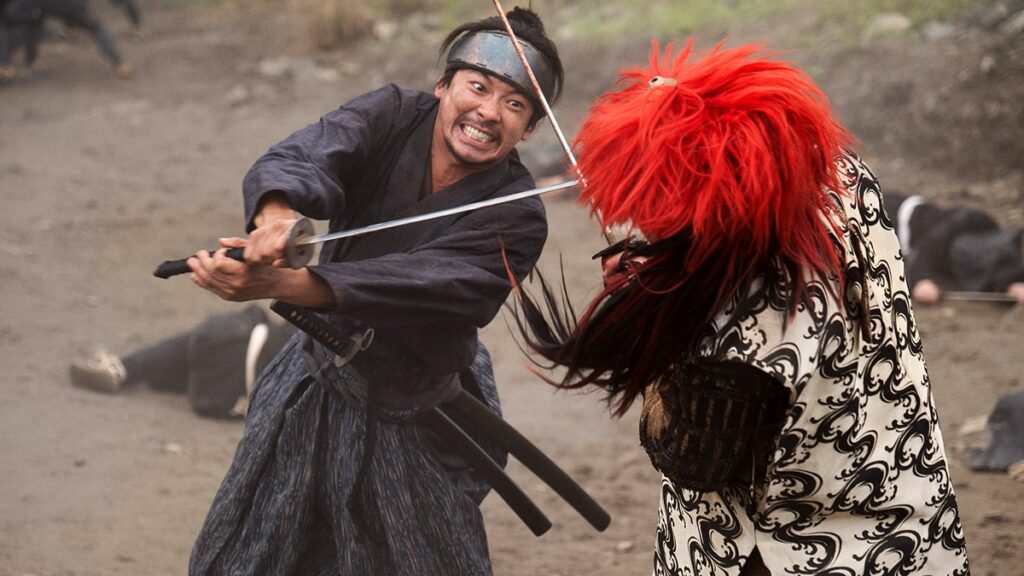
During the Boshin War (1868-1869), significant victories against Tokugawa Shogunate loyalists in the battles of Toba-Fushimi and Ueno made the Imperial Army the dominant force. Which eventually took down Nagaoka Castle in the process while making their advancement northwards through the country. The remaining Shogunate loyalists formed the Northern Alliance Army of the Oetsu Domains and approached the Shibata clan of Echigo Province to provide aid in the upcoming conflict against the Imperial Army, which could determine the fate of the country itself. The Shibata Clan, famous for their opportunistic, non-confrontational tendencies, receives a stern warning from the top brass of the Alliance, who inform Takumi Mizoguchi (Sadao Abe), the acting chief of the clan, to send his men to the Alliance’s cause or be prepared for an attack on the city. While the true lord of the Shibata Clan is an immature teenager who cannot be relied upon to guide the clan in tense situations, which is why Mizoguchi has taken it upon himself to attend to administrative matters. Shibata holds significant importance for the Alliance as it allows them to bring in weapons through naval routes and supplies through the country. Imperial Army chief, Yamagata Kyosuke (Hiroshi Tamaki) decides to send his messenger to Mizoguchi with the intention of bringing Shibata under the control of the Imperial Army. Despite knowing that Shibata is with the Alliance, Yamagata takes the chance, knowing the clan is not in a position to outright refuse the dominant ones.
Trouble arises when Mizoguchi learns that the feudal lords of the Alliance will arrive on the same day Yamagata’s Imperial Army advance party reaches Shibata, which means the Shibata Clan needs to pick a side to avoid getting wiped out by either side. At the same time, there’s a chance of an all-out conflict if opposing forces clash in Shibata, which will result in the loss of numerous lives. Mizoguchi hatches upon a plan by asking his son-in-law, Irie Kazuma (Shūhei Nomura) and best disciple, Washio Heishiro (Taiga Nakano) to join hands and raise a ragtag army comprising captive criminals. According to Mizoguchi’s command, in exchange for their service, the prisoners will be acquitted and will get a chance to return to their regular lives. The plan is to send them to fortify an outpost located in the outskirts of Shibata, waving the flag of Nagaoka while engaging with the advance party sent by Yamagata, thereby delaying the arrival of the Imperial Army. At the same time, Mizoguchi can welcome the feudal lords of the Alliance as well without fearing repercussions from the Imperial Army. In this way, neither the stick shall break nor the snake will die, which means Shibata will be spared from imminent disaster.
Among the captives is Masa (Takayuki Yamada), after one of the Shibata samurais, Zenemon Sengoku (Takuma Otoo) rapes his hearing and speech impaired wife, Osada, Masa exacts his brutal revenge by murdering him. As a result, he is brought to the execution arena, when Noro (Takara Sakumoto), a mentally unstable explosives expert, suddenly likens Masa to his elder brother and tries to rescue him, only to get himself captured as well. Masa is about to be beheaded until Heishiro arrives with his men to halt the execution, and Irie reveals Mizoguchi’s command to the prisoners. It should be mentioned that the prisoners are informed that they will be fighting for the Alliance against the Imperial Army. While most of the prisoners agree to take part in the struggle in hopes of freedom, Masa holds a grudge against Shibata for his wife’s predicament and refuses the proposal. However, he ultimately and begrudgingly agrees to the terms when threatened with being put in the cell of cholera patients.
Aside from Masa and Noro, there is Natsu (Riho Sayashi), a sex worker and the sole female member of the squad who orchestrated an arson incident to get back at one of her customers who forced her to perform an abortion. There’s this old spear instructor, Kohachiro Oshiba who killed his landlord; an unnamed vicious serial killer from Yonekura; a gambler named Akani; and a strapping young guy, Nimaime (Hayate Ichinose) who was imprisoned for having an affair with a samurai’s wife. Aside from them, there is an unnamed pervert, an unnamed mass family suicide survivor, and Oroshiya (Amane Okayama) who wanted to travel to Russia to learn medicine, a crime in the eyes of the isolationist government of the nation.
Noro finds a crude oil vein in close proximity to the outpost, and notices on the first night of their arrival that Masa is trying to bail on the team. As the team chases Masa, because desertion of a single team member could result in extermination of the entire squad, they spot an advance party moving towards the fortress, and they engage in a bloody skirmish. Defeated, the remaining survivors of the advance party retreat as the rebels successfully emerged victorious from their encounter. Masa’s mindless action draws the ire of the entire team, and Heishiro lashes out at him for jeopardizing the entire troop, but decides to spare his life because, during the conflict, Masa saved him. Masa has no wish to be used as a Shibata stooge; irrespective of whether he wins his freedom or not, he cannot undo what happened to his dear Osada. Natsu advises Masa to let go of his stubbornness and straighten up his act, at least for the sake of returning to his wife and helping her.
The crooked samurai assisting Irie and Heishiro look down upon the criminals and get into occasional arguments, and on one occasion, Irie confides in Arai, his second-in-command that Mizoguchi has no plans to free the criminals even if they succeed in their mission. This conversation is overheard by Natsu, but before she gets to share the news of betrayal with her comrades, another troop of the advance party launches an assault, this time with cannons, they wreak havoc on the outpost. However, bombs created by Noro swiftly change the course of the battle, and the serial killer guy sacrifices himself by taking a bomb to kill half a dozen enemies at once. Irie gets severely injured; Heishiro takes a lord of the Imperial Army captive, whom he ties up on the roof of the outpost, thereby stopping the attack of the Imperial Army in the process.
That night, Masa holds an injured Irie at gunpoint and injures Arai by shooting at him when he interferes, while revealing the treacherous Mizoguchi’s ulterior motives to the team. Heishiro, the only honorable samurai of Shibata, was surprise and completely unaware of this deceitful news before him. As Irie reveals, Heishiro was also unaware of the fact that Mizoguchi sent this skeletal team to fight the Imperial Army under Nagaoka’s banner to keep Yamagata under the guise of Shibata’s neutral stance, and after the feudal lords of the Allegiance leave, he will welcome the Imperial Army to the city as an act of non-violent surrender. There was a bridge that connected the fortress and the rest of Shibata with the mainland, destroying it which could have stopped the Imperial Army from entering, and Oroshiya had proposed to destroy it previously, only to get slapped by Irie for his suggestion. Now it becomes clear that Irie and the rest of the conniving samurai needed to allow entry to the Imperial Army through the bridge, which is why they refused to destroy it.
Realizing that they are going to get exterminated anyway, the mass suicide survivor guy raises his arms against Irie, and Arai ends up killing him, mentioning how expendable the criminal scums are and the samurai can use them in whatever way they please. However, Irie himself plunges his katana into Arai’s back and begs for forgiveness by promising that he will persuade Mizoguchi to pardon the criminals once the conflict is over. A tone of melancholy pervades as Heishiro’s entire belief system is shaken emotionally to the core as he step outside to contemplate.
The next day, Kana, Mizoguchi’s daughter who is pregnant with Irie’s child, arrives at the outpost by sneaking away from her quarters in Shibata. The squad seems to have a golden chance of getting out of this mess as Imperial forces stationed outside the outpost announce that the rebels will be pardoned if they join the Imperial Army. Irie, who is gaining consciousness after sustaining the severe injury, asks Heishiro to take the squad and surrender and decides to stand guard alone, to save whatever honor he has left. However, Heishiro shoots the captive Imperial lord, instantly obliterating any chance for the squad to get pardoned, which infuriates Masa as he delivers a beatdown to the samurai. Willing to save the people of Shibata at any cost, Heishiro mentions that the Imperial Army will raze the city if they learn about Mizoguchi’s plot following the squad’s surrender. He motivates the team to fight for their loved ones, for a just cause to protect others, despite being wronged by the system they are trying to protect. On the other hand, the cunning Mizoguchi continues to swear fealty to the Allegiance by posing cholera patients as rebel peasants and beheading them in front of the feudal lords.
A heavy downpour begins, and Heishiro plans with the rest of the squad to destroy the bridge to keep the Imperial Army stuck on the other side. However, Masa continues to prove to be a nuisance as he runs off again, crosses the bridge, and swears loyalty to the Imperial Army by bringing Arai’s head with him. He even reveals the truth to the imperial official: that contrary to what the Nagaoka banner hoisted at the outpost might make them believe, it’s the Shibata rebels with whom they are fighting at present. At the same time, the rest of the squad and Heishiro rig the bridge with a bomb to gain the advantage amidst the situation. However, regardless of his actions, Masa is dragged off to be executed by the Imperial Army, which is noticed by Noro who decides to cross the bridge on his own and save Masa’s life by detonating one of his bombs. Masa and Noro try to return to the outpost and get chased by Imperial warlords, when Nimaime decides to sacrifice his life by igniting the fuse to detonate the bombs on the bridge, resulting in both Masa and Noro falling to the river below. On the other hand, the feudal lords meet up with the immature, young Shibata lord, who spills the beans about how Mizoguchi was planning on deceiving the Alliance and merely awaiting their departure, which means the cunning snake has now made enemies of both sides he wanted to beguile. Yamagata learns about Mizoguchi’s deceit and the fact that Alliance forces are at Shibata Castle at present, and decides to attack the city in a roundabout way. The Alliance lords coerce Mizoguchi to perform harakiri as penance for his treachery, but before he is about to take his own life, the news of the Imperial Army’s attack on Nagaoka Castle arrives, prompting the feudal lords to leave and provide a lifeline to the conniving clan chief.
The next day, Irie passes away, handing over his katana to his wife, Kana, sharing his last wish for her to entrust it to Heishiro, out of respect for his comrade. Masa returns to the outpost with an unresponsive, seemingly dead Noro, as the poor kid’s sacrifice emotionally moves him. Natsu consoles Masa and tries to motivate him to carry on the good fight, when Noro miraculously wakes up, much to the relief of Masa and the rest of the team. Kana decides to return to Shibata, promising Heishiro that she will convince her father to pardon the criminals in exchange for the bravery they have shown in the face of unbelievable odds.
Thanks to Noro’s usage of crude oil in his bombs, the squad learns about the presence of an oil field right above the Imperial Army’s station on the other side of the bridge. For the first time, the team acts as one unit, as they somehow make their way to the other side using the ropes of the broken bridge. The squad finds an oil vein and opens up its flow, which results in the oil moving downwards towards the Imperial Army station, allowing the team to orchestrate a surprise attack by creating a fierce explosion using Noro’s bombs. In the final showdown, both Oroshiya and Kohachiro make an inspiring, moving last stand against their opposition amidst the chaos. Masa and Heishiro’s heroics result in all of the Imperial Army getting wiped out, thus emerging victorious against their enemies.
The next day, Kana, having returned to Shibata with Natsu, reunites with her father, revealing the news of Irie’s passing, and requests him to pardon the squad. At the same time, Yamagata arrives in Shibata but no clash erupts as Mizoguchi surrenders without hesitation, showing loyalty to the Imperial Army. Masa leaves on his own, but after going halfway to the city, he reconsiders his decision after noticing Shibata’s army, led by Mizoguchi, making their way to the outpost. The only surviving Suicide Squad members were the gambler, Akani, Noro and the unnamed pervert, appear elated seeing the Shibata army arriving as they consider this to be their chance to get free. However, the cruel reality strikes hard as Mizoguchi orders his men to open fire, resulting in the horrible death of the gambler and the pervert. The harrowing sight leaves Heishiro aghast; he genuinely started believing the criminals were his comrades and equals in all aspects and after what they went through together, freedom was the least bit of courtesy they deserved. But Mizoguchi was a cunning, ruthless man who wanted to hog all the glory and had no use for the rebels any longer. An enraged, aggrieved Heishiro announces himself as the 11th Rebel, and shows remarkable valor by raising his katana to slice through dozens of Mizoguchi’s men, avenging his comrades by massacring the Shibata army. The noble samurai would have been able to make quick work of his former master as well, but he unfortunately falls short, as instead of joining in an honorable duel, Mizoguchi shoots Heishiro to death. The rest of Mizoguchi’s men are taken care of by Masa, who arranges the remainder of Noro’s bombs and sacrifices himself by drawing the rest of the Shibata army towards him, meeting his end in a blaze of glory. Thus, the only surviving members of the suicide squad are Noro and Natsu who remain as the sole witnesses of the exploits of the unsung heroic warriors.
The ending shows Noro and Natsu visit Masa’s wife, Osada, share a certain amount of money with her, and hand her a piece of Masa’s clothing as a token of remembrance. Mizoguchi presents Heishiro’s head to Yamagata; the total elimination of the rebels was the price for the Imperial Army to agree to a nonviolent transfer of power, after all. Mizoguchi’s action allows Shibata to maintain peace, as the Imperial Army captures Niigata port and the Boshin War finally ends with the victory of the Imperial Army, paving the way for the Meiji Era Restoration period. However, Mizoguchi pays for his sins at long last when a pregnant Kana takes her own life in absolute disgust at her father, who didn’t keep his word and didn’t honor her husband, Irie’s sacrifice. Losing his only daughter, and also the heir to his family, is a worse blow to the veteran clan chief than death, and he will spend the rest of his life agonizing over it.
Final Assessment:
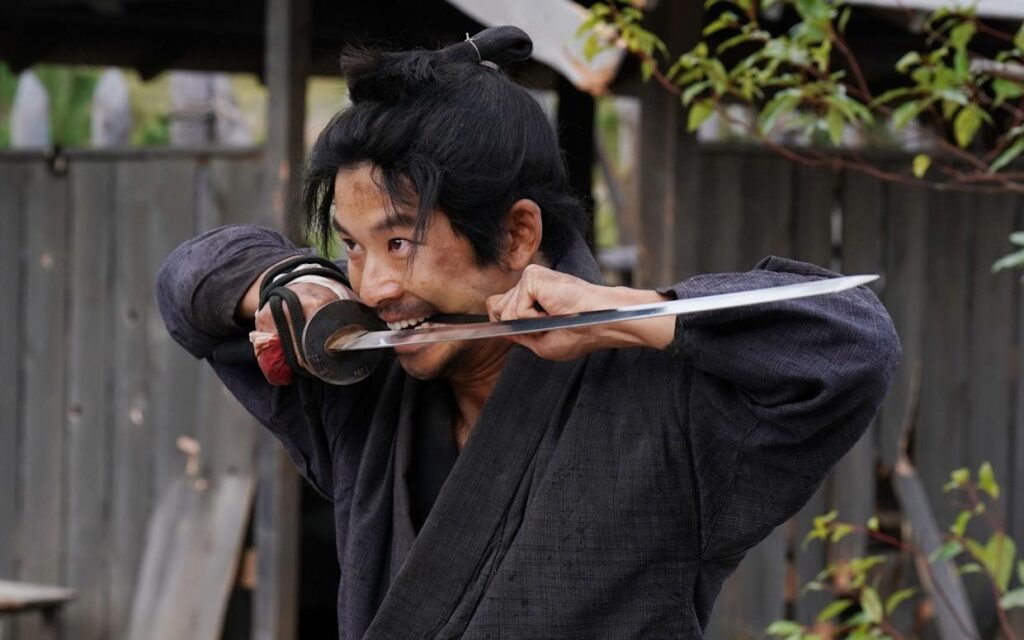
11 Rebels is another solid samurai film in a longline of films which further proves that this genre of Asian Cinema is still going strong. Thus I mentioned earlier that the film functions more like a companion piece to Takashi Miike’s 13 Assassins with it narrative. And functions more like a modern update (at least in my opinion) to Akira Kurosawa’s classic Seven Samurai film with it premise, about a group of individuals banding together. Also the name itself, “11 Rebels” is a possible reference to the 1967’s 11 Eleven Samurai film, directed by Eiichi Kudo. That being said, the film seems to barrow elements from recent and classic samurai films to create it own identity and become another solid entry in the genre. The film possessed strong themes of political intrigue, drama and betrayal while having a sense of adventure in that Akira Kurosawa style.
11 Rebels delivers lots of explosive action and cool swordplay which make the film enjoyable to watch especially to fans of Samurai Cinema. While the fight scenes aren’t as stylish as something like the Rurouni Kenshin film series (courtesy of choreographer and action director, Kenji Tanigaki), they’re still enjoyable to watch. Though some scenes in the film are brutal and emotional to watch especially when it come to the death of the title characters. But overall, 11 Rebels is still another solid entry in the samurai film genre which continue to get stronger throughout this decade. As for director Kazuya Shiraishi, this is the only film I’ve seen from him, though he does a good job in contributing a solid entry to the genre. In conclusion, 11 Rebels is a samurai film that longtime fans like myself can enjoy watching while also drawing in newcomers alike to the genre.
Do you like this movie? Do you think we’ve entered this golden age of Samurai Cinema? Let me hear your thoughts about today’s subject here in the comment section.